Waterproofing You Never See: The Membrane Under Every Wet Area
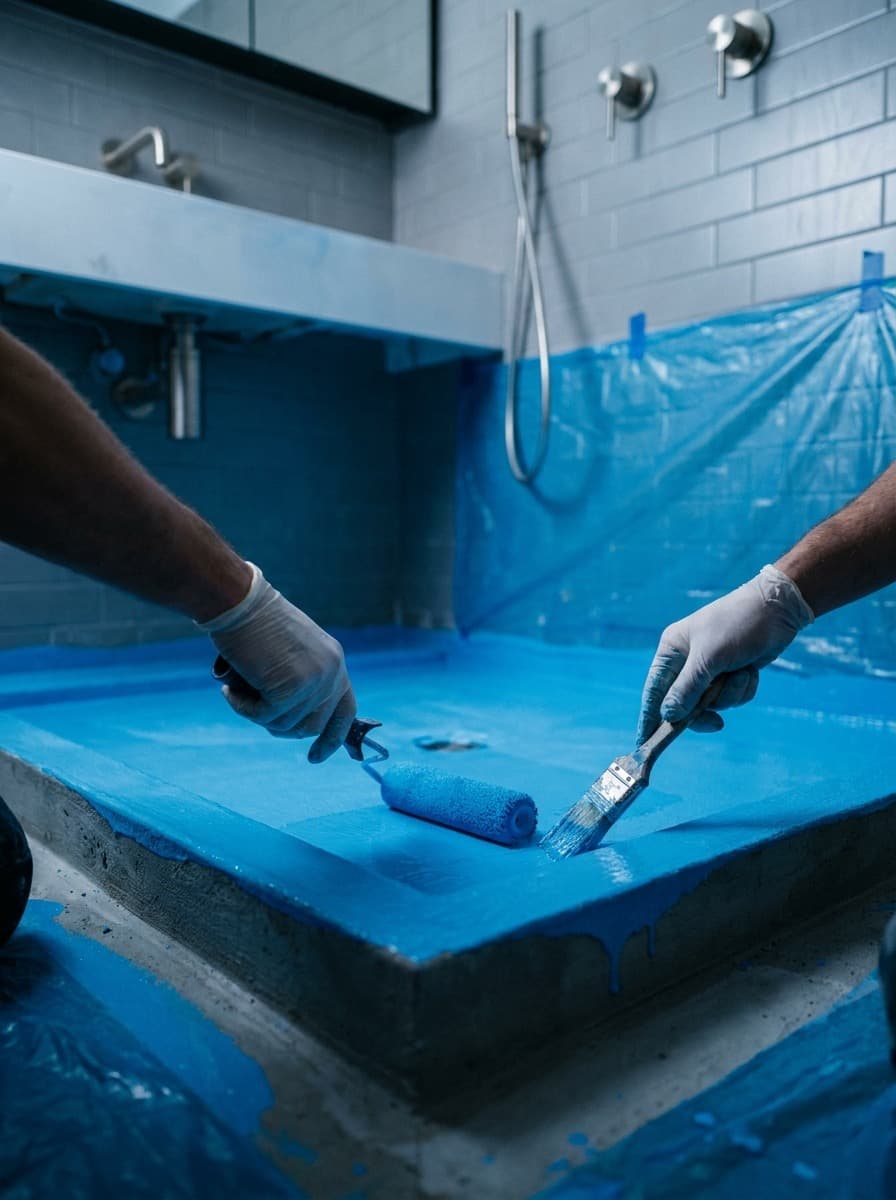
The most important part of a wet area is the part nobody sees. Under the tiles of every bathroom is a waterproof membrane, and that membrane is the only thing standing between the shower and the room below. When it is done right, it is invisible for the life of the building. When it is done wrong, it becomes the leak that spreads across a ceiling and never quite gets fixed.
For an agent or building manager, waterproofing is easy to underrate precisely because you never see it. But it is the layer that decides whether a wet area holds, and getting it right is entirely about the sequence and the detail.
What a membrane actually does
Tiles and grout are not waterproof. Water passes through grout lines and around penetrations, and the membrane underneath is what catches it and directs it to the waste rather than into the structure. It is a continuous barrier applied to the substrate before the tiles go on, built up to a specified thickness and reinforced at every weak point.
The weak points are the junctions and penetrations: where the wall meets the floor, where a pipe passes through, where the shower screen fixes. These are where water works most persistently to escape, so these are where the membrane has to be strongest.
Why the sequence is everything
The single rule that governs a wet area is that the membrane is cured before the tiling goes over it, never the reverse. Tiles laid over a membrane that has not properly cured, or over a membrane that was skipped or rushed, is the most common cause of a leaking shower.
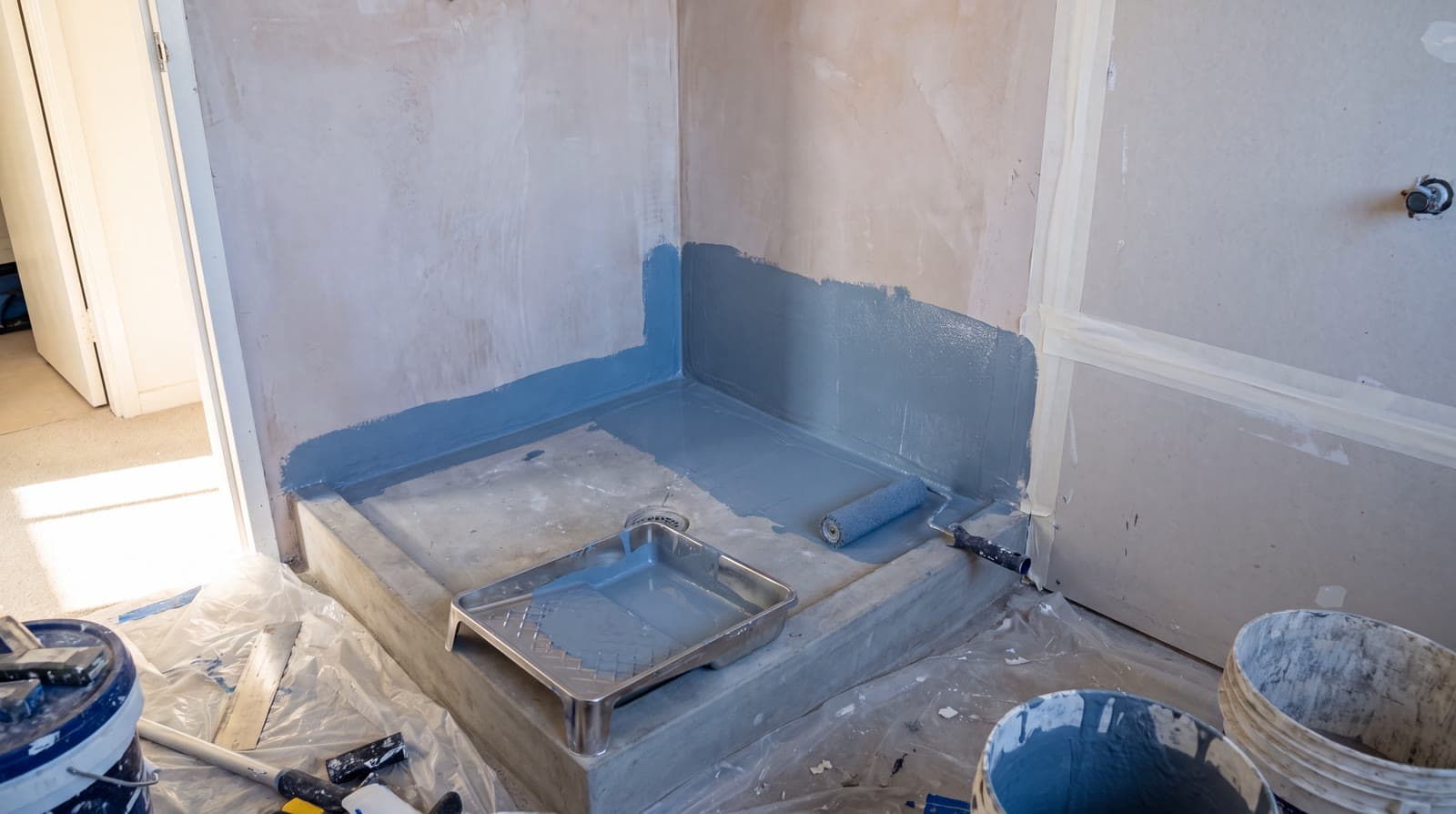
That means waterproofing cannot be treated as a step to hurry. The membrane needs the correct primer, the correct film build, junction and penetration reinforcement, and time to cure before a single tile is laid. Get the order wrong to save a day and you buy a leak that costs weeks later.
The falls and the flood test
Two other details separate a wet area that holds from one that ponds. The first is the falls: every wet area needs a correct fall to the waste so water runs away rather than sitting. The second is verification, a flood test that confirms the membrane holds water before anything goes over it.
These are the checks that do not show up in a photo of a finished bathroom, which is exactly why they get skipped by work that is being rushed. They are also the checks that decide whether the room is watertight, so they are not optional.
Why one team owns the whole wet area
The reason a leaking shower is so hard to solve with separate trades is that the membrane sits between the plumbing and the tiling, owned by neither. Ample Trade owns all three. The same operator who plumbs the penetration confirms the membrane around it and lays the tiles over a cured surface, so there is no seam for water to find and no vendor to blame.
The certainty that the shower never leaks again is the premium. The client never sees the membrane, and with the standard held, they never have to think about it.
If a wet area on your book needs doing properly the first time across the Eastern Suburbs and the city, [send us the list](/contact) or see [what we handle](/services).
Every trade. One Standard.
Related Articles
Tell us about your building.
We will respond with a clear understanding of how we can help.
Get in Touch