
Tile And Grout Failure: What It Is Telling You
Grout cracks and tiles come loose for a reason, and the reason is almost never the grout.
Regrouting a floor that has failed underneath produces a floor that looks fixed for a few months. Then the same lines open up, usually in the same places.
Drummy tiles
Tap across a tiled floor and some of it sounds hollow. That is a tile that has lost its bond to what is beneath it.
It happens when the substrate moves, when the adhesive was applied badly, or when water got underneath and worked away at the bond. A drummy tile is not urgent on its own, but it is a report on the condition of the floor under it.
A few drummy tiles in one spot is a local problem. Drumminess across a whole area means the floor itself is the issue.
Cracks that follow a line
Grout cracking in a straight run, particularly where a floor changes direction or meets a wall, is movement.
Buildings move. Floors expand and contract. Where that movement was not allowed for with a proper joint, the tiling relieves it at the weakest point, which is the grout. Fill it with more grout and it cracks again, because nothing has changed about the movement.
The fix there is a movement joint in the right place, not more grout.
Cracks in one tile
A crack straight through a tile rather than along a joint usually means something under it gave way, or the tile took an impact.
If several tiles have cracked in a line, that is the substrate rather than the tiles.
Grout that is only dirty or worn
Not every problem is structural. Grout in a wet area wears, stains and grows things, especially where it is not sealed and not ventilated.
That genuinely is a surface job, and it is worth doing because grout in poor condition lets water sit against the edges of tiles.
Knowing which of these you have is the whole question, and it is answered by looking rather than assuming.
In a wet area it matters more
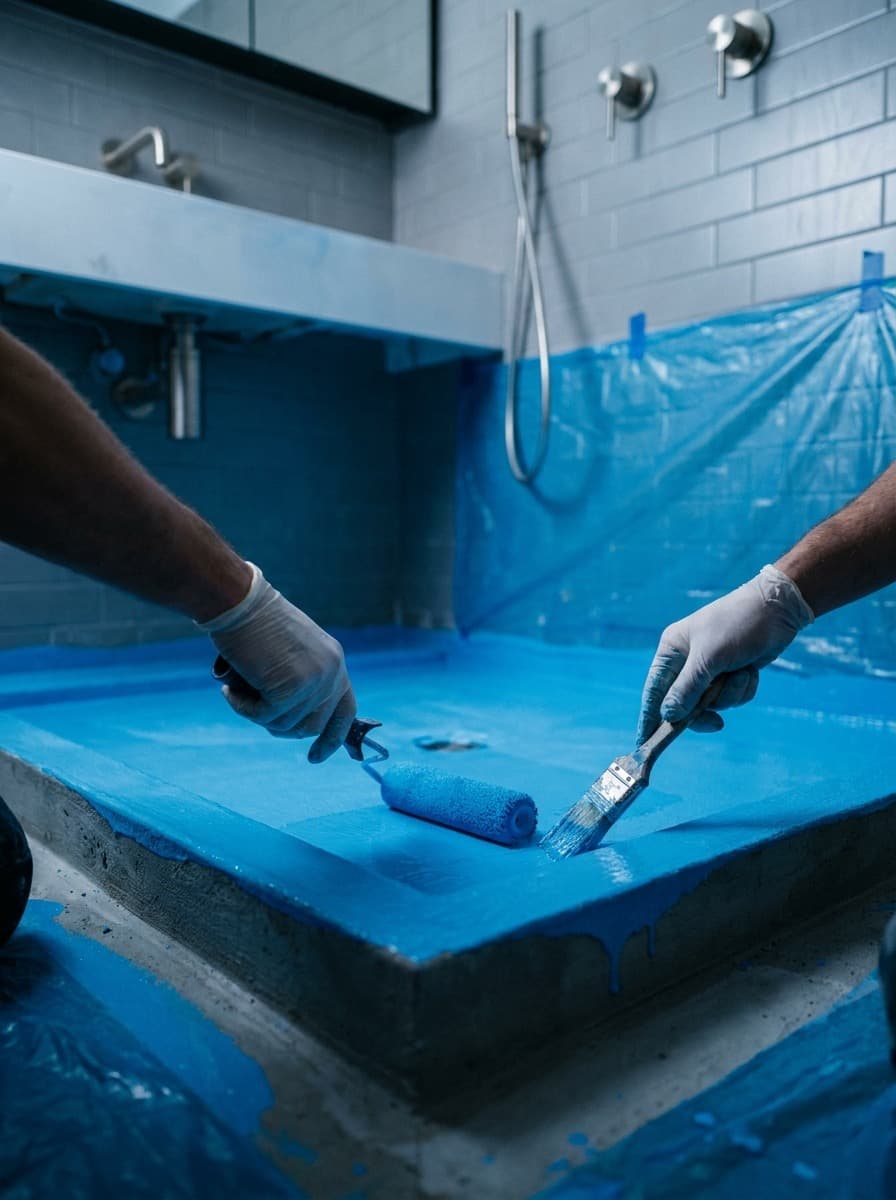
On a bathroom or laundry floor, failed grout and drummy tiles are a warning about the membrane underneath.
Grout is not waterproof. The membrane is. But grout in poor condition lets far more water reach the membrane and the edges, and if the membrane was marginal to begin with, that is where it starts to fail.
Water appearing in the room next door, or below, means the membrane has already been compromised, and at that point the repair is not a tiling repair.
What to check before booking anything
Where the cracking is, whether it follows a line, whether tiles sound hollow, whether the area is wet, and whether there is any sign of moisture anywhere adjacent.
That is enough to tell whether this is a surface job or a floor job, and it is worth establishing before someone regrouts a floor that needed lifting.
Related Articles
Tell us about your building.
We will respond with a clear understanding of how we can help.
Get in Touch