
Make-Good That Looks Original, Not Patched
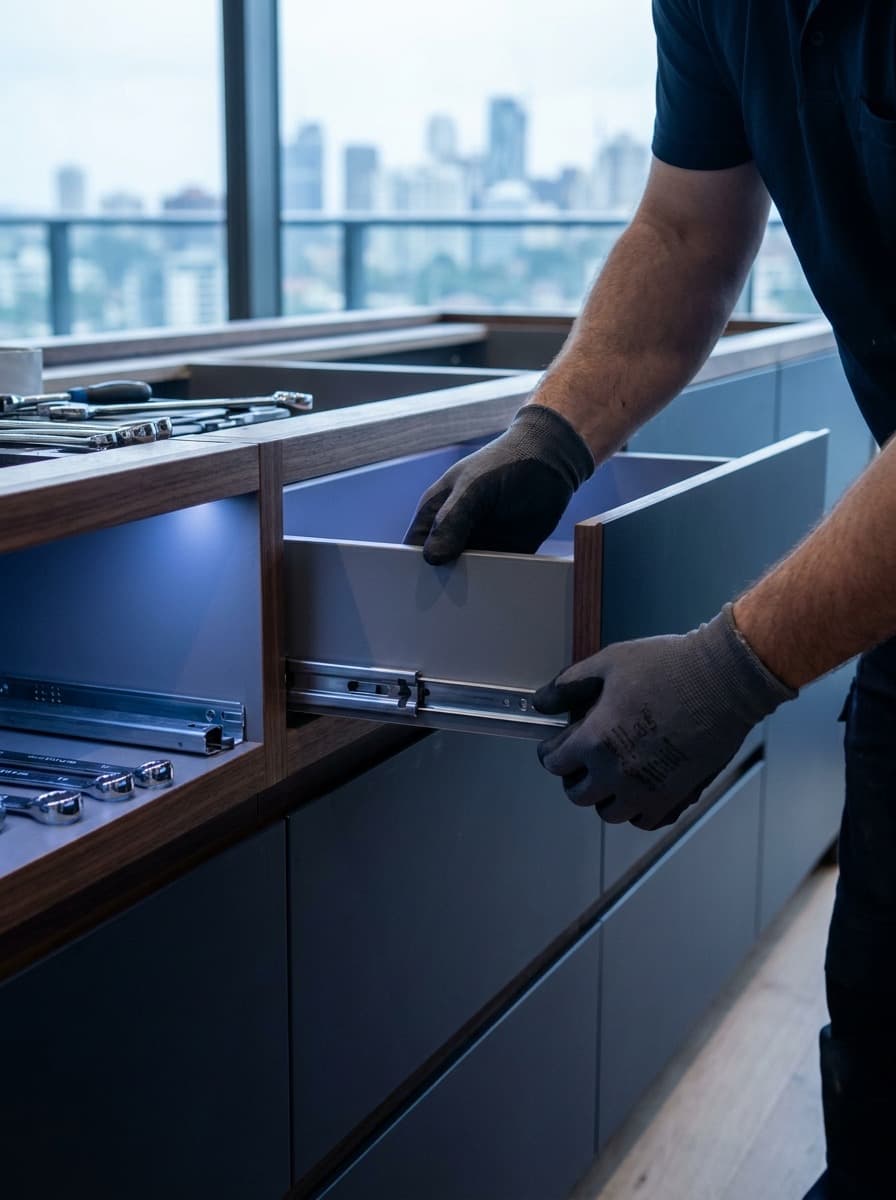
The worst handover in property work is a familiar one. A trade breaks into a wall or a cabinet to reach a fault, fixes their part, and leaves. The repair to the wall or the cabinet is somebody else's job, or nobody's, so the client is left with a patch and a blame trail. The fault is fixed, but the room looks like it was fixed, which for an occupied property is its own problem.
Make-good, the carpentry and repair that returns a space after a trade has been through it, is where the whole all-trades argument gets tested. It is the least glamorous work and the most revealing, because it is the layer other operators rush.
The connective trade
Building and interiors is the layer that ties every other trade together. Cabinetry and joinery, doors and windows, skirting and architraves, timber repairs, locks and hardware, and the hundred small jobs a property throws at you between trades. It is not new builds. It is the connective tissue of an occupied property, the work that returns a space as if the disruption never happened.
That connective role is exactly why it gets orphaned when trades are split. The opening a plumber or an electrician makes to reach a fault is not their trade to close. So it sits open, or gets a rough patch, and the make-good becomes the thing nobody owns.
Where the standard shows
Make-good is the layer where a standard higher than the client's own shows up most, because a patch is either invisible or it is not. The tells of good make-good are the ones you have to look for:
- A wall repair that reads as original wall, not a lighter square of fresh plaster and paint
- A cabinet rebuilt to match the run it sits in, not an approximation bolted back on
- A door rehung so it closes clean and latches first time, with the reveal even down the edge
- Silicone and sealing lines that are crisp and consistent, not smeared to save a minute
None of that is hard to specify. It is hard to do consistently, on the small jobs, when the fault is already fixed and the temptation is to move on. That is the difference between a room that looks repaired and a room that looks untouched.
The dishwasher, again
The cleanest proof of the make-good discipline is the job that needs it most: fitting a dishwasher where there is no opening, only cupboards and bench. The plumbing and the electrical are only half of it. The other half is the cabinetry, removed and rebuilt around the new appliance so the run looks like it was always meant to hold a dishwasher.
One operator fits the water point, fits the power point, and does the cabinetry make-good, in one visit. The reason it works is that the same hand that made the opening closes it. There is no orphaned repair, because there is no handover.
One hand owns both ends
For the agent or building manager, the value is a job that closes completely, not a fault fixed and a repair still outstanding. When one team owns every trade, the opening and its make-good are one scope to one hand. The disruption is returned as if it never happened, and there is no second trade to book to finish what the first one started.
The make-good looks original, not patched, because the same standard runs from the fault to the finish.
If your properties across the Eastern Suburbs and the city keep ending up with faults fixed and repairs outstanding, [send us the list](/contact) or see the [building and interiors scope](/services/building).
Every trade. One Standard.
Related Articles
Tell us about your building.
We will respond with a clear understanding of how we can help.
Get in Touch