
Adding Power Points And Circuits In Older Apartments
Apartments built decades ago were wired for a fraction of what people plug in now. Two outlets in a bedroom, one near the bench, none where anyone actually wants them.
Adding more sounds like an hour of work. Sometimes it is. Often the wall and the board decide otherwise.
The board comes first
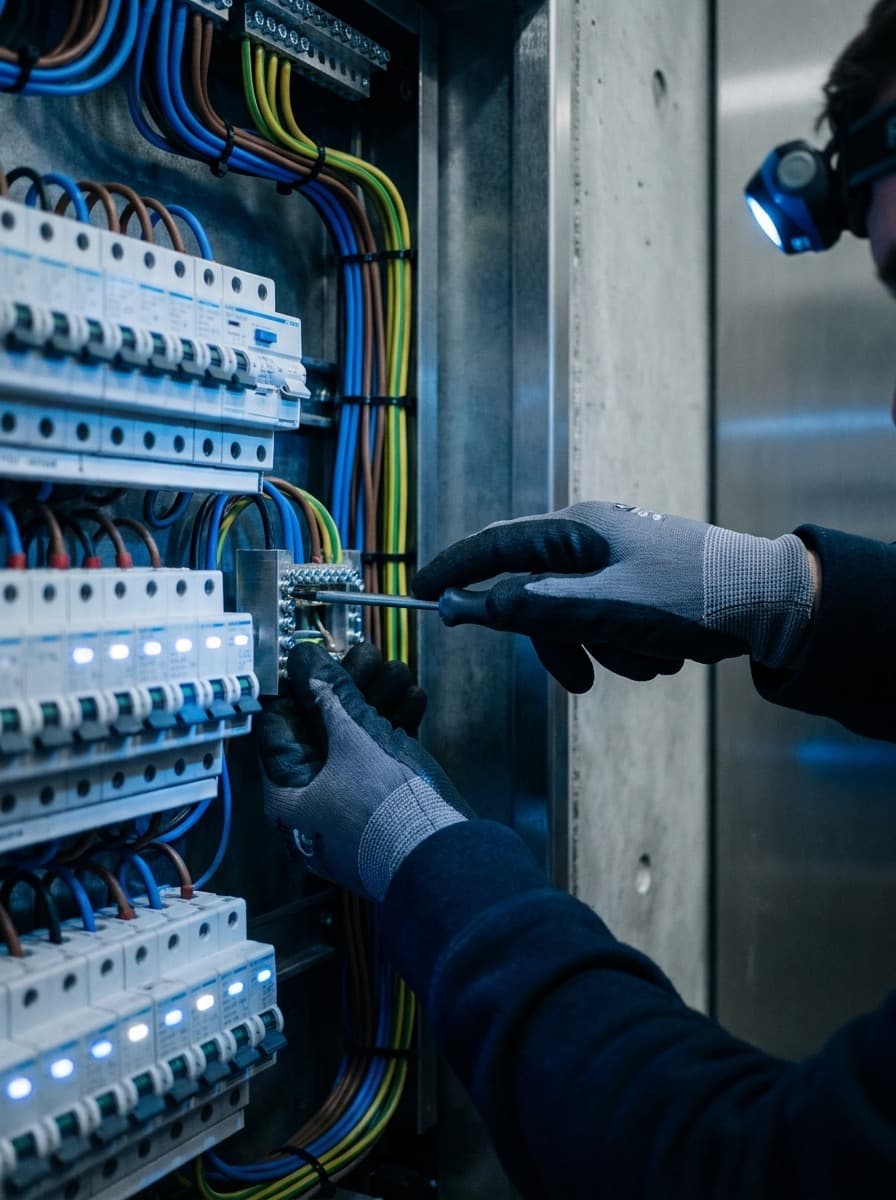
Every new circuit needs a spare way on the switchboard, and older boards frequently have none.
Beyond space, there is the age of the board itself. Boards from a certain era have no residual current protection, ceramic fuses rather than circuit breakers, and in some buildings wiring that has aged past where it should be extended.
Adding load to a board like that is not a matter of finding room. It usually means upgrading the board first, and that is the honest answer rather than an upsell.
A short assessment tells you which situation you are in, and it is worth doing before anything is designed around new outlets.
Extending a circuit versus adding one
An extra outlet on an existing circuit is the quick version. It works where the circuit has capacity and where the new outlet is a light load.
It stops working when the circuit is already loaded. Adding a fifth or sixth outlet to a circuit that was serving a whole room means the protection trips when everything is on, which is the system doing its job.
Anything with a real load, an air conditioner, an induction cooktop, a car charger, a workshop, needs its own circuit rather than an extension.
What is behind the wall
This is where the time goes in an older apartment.
Solid masonry. A lot of older apartments are brick internally, not stud. Running a cable means chasing a channel into the brick, which is dusty, slow, and means patching and painting afterwards.
Concrete. Slabs and some walls cannot be chased at all. The cable has to go around, in a surface duct, or through the ceiling space if there is one.
No cavity. Where there is no accessible route, the options are a surface mounted duct, or accepting the outlet where the cable can reach rather than where you wanted it.
That is why the position of a new outlet is worth discussing before the quote rather than after. Moving it half a metre can turn a difficult run into a simple one.
The strata line
The wiring inside the apartment is generally the owner's. The board, the riser and the supply into the apartment are usually common property.
Any work touching those needs the owners corporation involved. A board upgrade in particular often sits on the boundary, and establishing that early avoids a job stopping halfway.
What to do at the same time
If a wall is being opened or a ceiling accessed, do everything at once.
Data cabling, which is far harder to add later. Lighting changes. The extra outlet in the next room. Smoke alarm interconnection where the building needs it.
The cost of the second outlet installed on the same visit is a fraction of the first, and the patching and painting happens once.
The finish matters
An outlet installed with a chased and patched wall that has not been made good properly is a job people look at every day.
We take the electrical work, the patching and the painting as one job across electrical, building and painting, so the wall goes back the way it was rather than reading as a repair.
If you are planning a fitout or a refresh in an older apartment, have the board looked at first.
Related Articles
Tell us about your building.
We will respond with a clear understanding of how we can help.
Get in Touch