
A Warm Room and a Dripping Unit Are One Problem, Not Two Trades
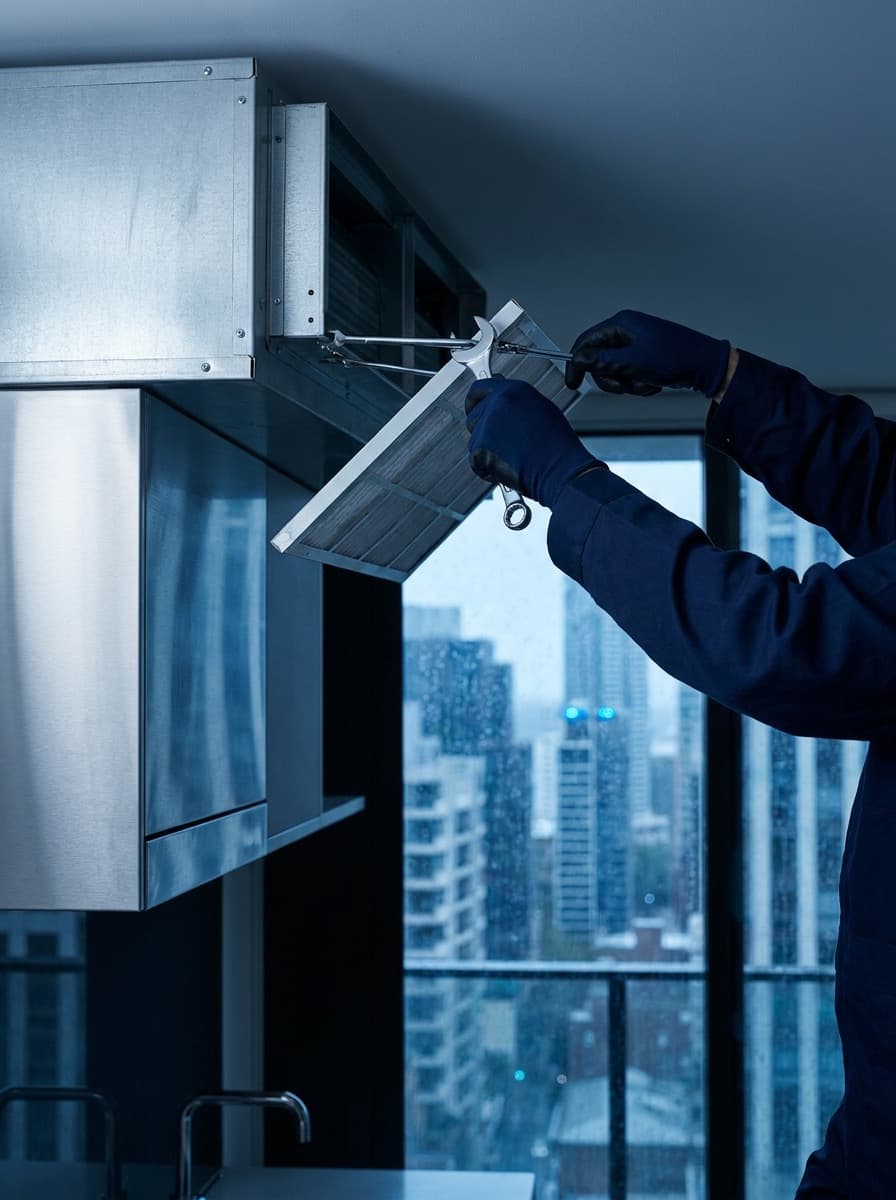
An air conditioner looks like a single specialist's job. It is not. A split system sits on the seam of three trades at once: the electrical circuit and isolation, the condensate drainage, and the penetration and make-good through the wall. That is why the classic air-con failure is not the unit itself. It is a condensate line that does not drain, quietly becoming water damage in the room or the unit below.
For a boutique hotel manager, where a warm room or a stain on a ceiling is a guest-facing failure, or a building manager running climate systems across a whole property, the seam is exactly where a separated trade creates the next call-out.
Where the water goes
Every split system produces condensate, and that water has to go somewhere. When the drainage is set correctly, the client never thinks about it. When it is not, the condensate backs up and finds the path of least resistance, which is usually straight down into the ceiling below.
A blocked or badly-run condensate line is a water-damage source hiding inside what looks like an electrical appliance. An installer who has only ever done air-con may set the unit perfectly and still leave the drainage to chance, because tracking where the water goes is a plumber's instinct, not a fitter's. That is the seam, and it is where the fault is born.
The three trades in one install
Look at what a split-system install actually involves and the three trades separate out clearly:
- Electrical: the circuit, the isolation, and the connection, so the unit runs safely and does not nuisance-trip the board
- Plumbing: the condensate line, run and terminated so the water drains properly and does not pool
- Building: the penetration through the wall and the make-good around it, so the install is neat and the wall is returned cleanly
Split across three vendors, each does their third and none owns whether the whole thing works together. The result is a unit that cools but drips, or runs but trips, because the seams between the trades were nobody's job.
Why one hand sets it right
An operator who holds electrical, plumbing, and building at once sets the drainage right the first time, because the same hand that installs the unit understands where the water goes. The circuit is checked, the condensate is run correctly, the drainage is confirmed, and the penetration is made good, in one visit by one team.
The tell of competence here is not the unit on the wall. It is the condensate line that drains, the run that is neat and lagged, and the quiet, balanced result that the client never has to think about again. A warm room and a dripping unit are one problem, and one hand solves them together.
What the buyer gets
For a hotel manager, guest comfort is the product, and a fault that a guest sees is a review. Climate work done discreetly, around guests, under one accountable name, keeps the illusion of effortlessness intact. For a building manager, unit and common-area climate systems become one line on the whole-building trade list, not another separate vendor to hold accountable.
Either way, the value is comfort that does not generate the next call-out, because the seams were owned by the same hand that did the install.
If climate systems across your Eastern Suburbs or CBD properties keep generating water problems, [send us the list](/contact) or see [what we handle](/services).
Every trade. One Standard.
Related Articles
Tell us about your building.
We will respond with a clear understanding of how we can help.
Get in Touch